


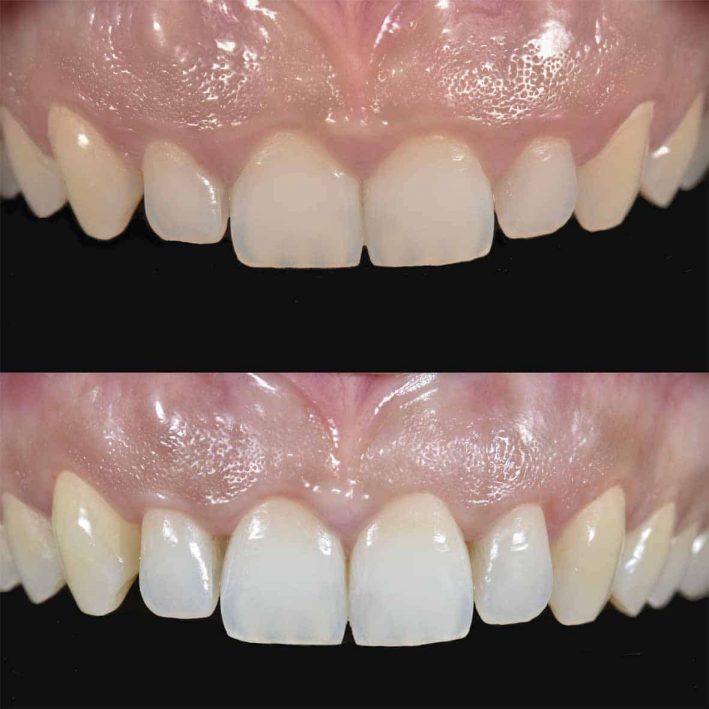
Gingivectomy and crown lengthening are surgical procedures aimed at lengthening the visible part of one or more teeth by trimming the gum. They are indicated for patients who have suffered an enlarged gum or for those who want to improve the esthetics of teeth with excess gum (gummy smile).
Differences between gingivectomy and crown lengthening
The difference between gingivectomy and crown lengthening is that in the latter, part of the bone is also cut away, thus preventing the gum from growing back (the bone helps the gum to regenerate). It is important that the diagnosis is made by a good gum specialist to assess which of the two interventions applies in each case.
These are simple procedures, which in most cases can be performed on an outpatient basis and under local anesthesia. Below we describe the most common casesthat require a gingivectomy or crown lengthening and what steps you should follow for the best recovery and outcome.
Cases in which you will need a gingivectomy or crown lengthening
- Gingival enlargement: Bacterial plaque is the sedimentation of bacteria in our oral cavity. When plaque accumulates behind the gum, it can cause it to become enlarged. In these cases, the gingivectomy should be performed once all the bacterial plaque has been eliminated and a few days have passed so that the gum is swollen and can be operated on. In some cases, this gingival enlargement or hyperplasia may be caused by the side effect of some drugs such as anticonvulsants, immunosuppressants or calcium channel blockers, among others.
- Gummy smile: When we talk about gummy smile we refer to those people who have a gum that covers the tooth excessively, reducing its visible part. This situation may be the result of an anomaly in dental eruption, wear of the dental margins or the particular physiognomy of the patient. Thanks to crown lengthening or gingivectomy we are able to correct this situation improving the harmony of your smile. In the indicated cases, we will recommend complementing such intervention with the subsequent placement of crowns and/or dental veneers. It will be of vital importance that the gum and esthetic specialists carry out a multidisciplinary diagnosis beforehand to determine the margins of intervention, the type of dental restoration required for each tooth and to coordinate the timing of both treatments.
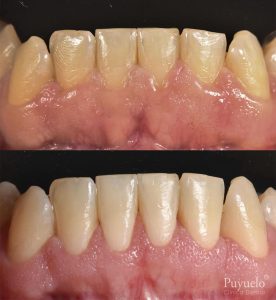
Phases of gingivectomy or crown lengthening
1. Extirpation: it is the removal of the gingival tissue, either affected by bacterial plaque, or the excess in an aesthetic case of gummy smile.
2. Suturing: after removal of the excess tissue, the gingival line that has been removed is sutured.
3. Suture removal: Sutures will be removed between 10 and 14 days after surgery.
How long does it take to recover from a gingivectomy?
Basic care after a gingivectomy or crown lengthening will include: following a soft diet, drinking plenty of cold liquids and not straining the treated area to allow it to rest.
During the first 36 hours after the operation, you may feel discomfort that will subside with painkillers and in most cases, the gum will be fully recovered within two weeks.
For a better recovery and result after a periodontal intervention, from our dental clinic we recommend you:
1. Avoid brushing and flossing in the operated area during the week following surgery.
2. Perform chlorhexidine rinses during the week following the operation.