



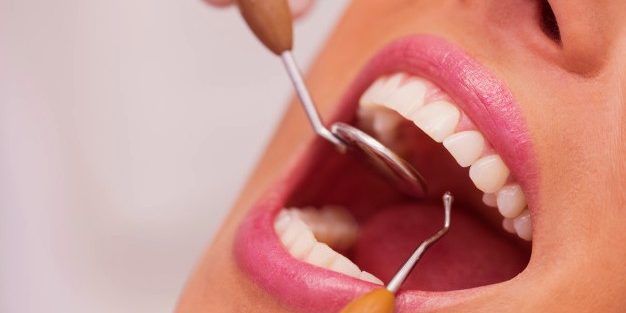
Tartar is one of the most common oral conditions and one of the main causes of oral pathologies. Despite being so common, many patients are unaware of what tartar really is and why we should prevent its appearance. In this article our specialists clarify what it is, the consequences of not treating it and the methods we have to eliminate and prevent it in our dental clinic.
What is tartar and why does it appear?
Tartar is easily identified as a yellowish or brownish paste that sticks to our teeth, but it is actually the calcification of dental plaque. Plaque originates through contact between saliva and food-derived bacteria. The appearance of tartar is an indicator that plaque levels in the mouth are high.
Depending on its location, tartar can be classified into two types: supragingival tartar is that which accumulates on the teeth and gums, while subgingival tartar accumulates under the gums.

What is the best treatment to remove tartar?
Tartar buildup causes a wide variety of dental problems. In addition to causing halitosis and yellowing of the teeth, it is the main cause of gum inflammation and periodontal diseases such as gingivitis or periodontitis.
Tartar accumulation also causes the appearance of caries, which can affect the dental nerve if not treated in time. In this case it will be necessary to perform an endodontic treatment to preserve the tooth.
What is the best treatment to remove tartar?
The best weapon to fight tartar is prevention.
To prevent tartar, good daily dental hygiene is necessary through proper brushing after meals and the use of dental floss or interdental brushes at least once a day.
Once tartar has formed, it cannot be removed from the teeth by brushing or home methods, but will require a professional dental cleaning by a specialized hygienist.
A dental hygiene or dental prophylaxis carried out with the appropriate techniques and appliances manages to remove all tartar from the visible part of the tooth in a session of approximately one hour. To maintain good oral health, we recommend annual professional hygiene, or one every six months in severe cases of plaque build-up.
Why is dental curettage important to remove tartar?
Scaling and root planing, colloquially called dental curettage, is the treatment indicated to remove subgingival tartar: the tartar that has accumulated under the gums.
It consists of a deep cleaning using ultrasound and professional curettes to remove tartar between the tooth and the gum. This treatment will be performed under local anesthesia and will therefore be completely painless.
Finally, in cases of tartar accumulation in the deepest areas, which we cannot access through our professional curettes, we will recommend resective surgery, which consists of making a small incision in the gum and removing the tartar that is deteriorating the dental support (gingiva and bone).
In these cases, our gum specialist will assess whether the bone and gum loss is sufficient to recommend a bone and/or gum graft that would restore tooth support and prevent tooth loss.
In our dental clinic, we have a team specialized in dental prevention that elaborates personalized prevention plans and studies the times, particularities and frequency of maintenance to avoid caries and gum disease, thus maintaining the oral health of our patients in the long term.
If you have any questions, do not hesitate to call us at 934876960 and we will be pleased to help you.


