



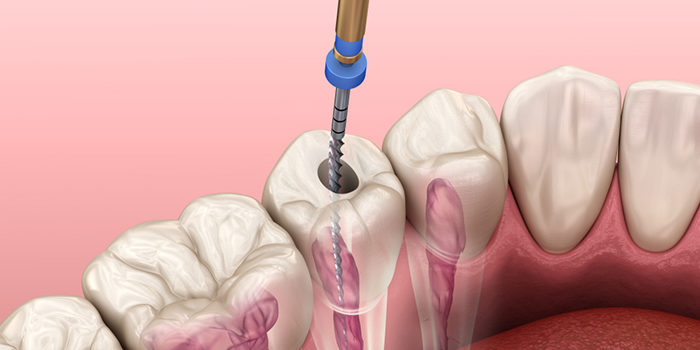
One of the specialties we work in is endodontics. Endodontics is the branch of dentistry that studies the diseases and lesions that occur in the soft tissues inside the tooth (in the dental pulp or dental nerve). When the dental pulp (or nerve) is infected or very inflamed, root canal treatment or endodontics must be performed. This procedure is colloquially known as ‘killing the nerve’ , but this is not entirely accurate, so in today’s article we are going to explain it to make it clearer.
Killing the dental nerve, how is it done?
As mentioned in the previous paragraph, many people colloquially speak of having ‘killed the nerve’ when they have undergone root canal treatment.
The fact is that killing the nerve and performing a root canal are procedures that have a lot in common.
What exactly is endodontics?
Endodontics is a procedure aimed at relieving dental pain caused by deep caries, dental trauma or a fissure that has affected the dental pulp, where the nerves and blood vessels that give ‘life’ to the tooth are located.
That is why, when this area is affected by any of the above-mentioned reasons, the patient usually reports acute pain in that area.
In endodontic treatment, we clean the affected area as much as possible, removing the damaged dental pulp and the infection from inside the tooth. Subsequently, we fill the tooth gap with biocompatible and regenerative materials. Finally, we seal the tooth to prevent bacteria from returning to the inside of the tooth.
In this way, we free the patient from pain and recover the health of the tooth avoiding its extraction.

Does it hurt to have a root canal performed?
A root canal is performed under local anesthesia, so that there is no pain during your procedure. However, on some occasions, when the dental pulp is very inflamed, there may be pain. In these cases, it is advisable to follow the indications of our endodontic specialist to calm the pain and be able to perform the procedure.
How is it done?
The first thing to do before performing a root canal is to measure the extent of the condition and whether it has affected the dental nerve. For this, in our dental clinic in Barcelona we have a 3D CT scan, which allows us to see the anatomy of the tooth in 3 dimensions and thus provide an accurate diagnosis.
It is important to note that the procedure will be carried out under absolute isolation and with the aid of a dental microscope.
With the microscope we are able to work very precisely on the affected area without touching or damaging the surrounding areas along the way.
What is the postoperative period after endodontics?
As we have seen, the endodontic procedure is not painful for the patient, since we apply local anesthesia and use instruments to be as precise as possible.
In the days following the intervention, the treated patient may experience a slight inflammation of the area and discomfort, so it is recommended to follow the instructions of our specialist, take more care than ever hygiene and take a soft diet for a few days.
What can I expect after treatment?
The first thing our patients tell us after undergoing such a treatment is an immense sense of relief.
Endodontics is always performed when there is already damaged tissue and, therefore, most of the time it causes pain. Thus, after a treatment to ‘kill the nerve’ we put an end to this pain and the associated discomfort.
In addition, the most important thing for our patients is that they can keep the tooth, avoiding the consequences of a possible extraction.


