


What is gingival recession?
Gingival recession is a condition in which the gums recede, exposing the roots of the teeth. This may result in a less esthetic dental appearance and may also cause tooth sensitivity. Causes of gingival recession include:
- Malocclusion and occlusal trauma: when teeth do not fit together properly or there is dental misalignment, undue pressure on certain teeth can lead to gingival recession.
- Periodontal problems: Periodontal disease, such as gingivitis or periodontitis, is a common cause of gingival recession. Inflammation and infection can damage the gum tissue and cause it to recede.
- Brushing too hard: Excessive toothbrushing or using a toothbrush with hard bristles can injure the gingival tissue.
- Oral piercings: piercings in the tongue, lips or cheeks can cause constant friction against the gums and lead to gingival recession.
- Smoking: Smoking negatively affects gum health, increasing the risk of gingival recession.
- Autoimmune diseases: some autoimmune diseases, such as Sjögren’s syndrome or oral lichen planus, may contribute to gingival recession.
- Genetic factors: some people may have a genetic predisposition to gingival recession.
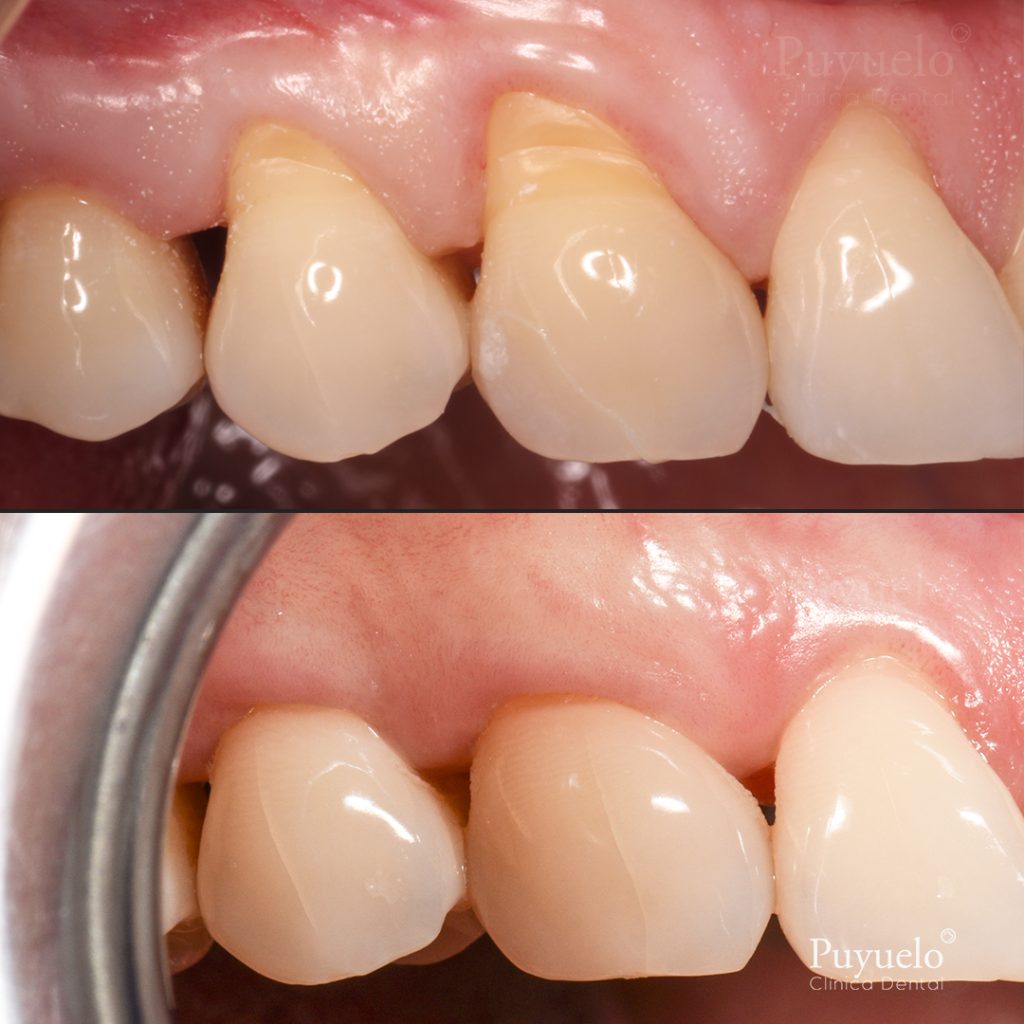
Recessions treated with gingival grafting
What is the treatment?
- Orthodontics: if gingival recession is caused by malocclusion, orthodontics may be considered. This involves the use of invisible aligners or brackets to correct the position of the teeth and stabilize the occlusion. Dr. Orwah Abboud, Orthodontic and TMJ specialist will evaluate your case in order to establish the best treatment plan.
- Periodontal treatment: when gingival recession is caused by periodontal problems, a periodontal approach is essential. This includes a complete periodontal study, oral prophylaxis, scaling and root planing to remove calculus and bacteria that lie beneath the gums. In severe cases (recession greater than 2 millimeters), gingival grafting or bone regeneration treatments may be considered to restore lost tissue. Dr. Neus Carrió, specialist in Periodontics, together with her team of hygienists will evaluate the underlying cause and determine the best treatment plan.
- Correct Brushing Technique: education on brushing technique is fundamental. Patients should learn to brush gently, use soft or electric toothbrushes and complement with the use of dental floss and interdental brushes to maintain proper oral hygiene. Electric toothbrushes usually have force sensors to avoid overly vigorous brushing that could damage the gums.
In addition to these treatments, regular follow-up with a periodontist is crucial to evaluate progress and maintain good oral health. Prevention, early detection and proper treatment are key to addressing gingival recession and preventing future dental problems. If you have gingival recession, we recommend that you consult the Puyuelo Clinic, our team of dentists will advise you in the best possible way.