



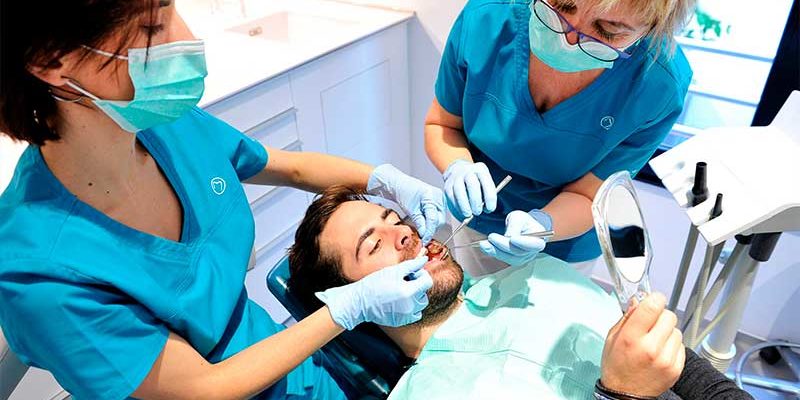
The dental surgery and periodontics are two of the specialties that we work in our dental clinic. This time we will talk about a very interesting topic: gum grafting and its postoperative period.
Receding Gums Why does it happen?
First, let’s look at the symptoms that may require a gingival graft. The main one is that they have been damaged after severe periodontitis.
This gum disease is capable of wearing away the tissue attached to the tooth, making it less and less in quantity.
Habits such as smoking or inadequate tooth brushing may favor the appearance of this disease.
In addition to increased tooth sensitivity, receding gums can cause tooth mobility and affect the esthetics of the smile, as it will appear much more toothed.
What is gingival grafting?
Gum grafting is a microsurgery that represents the best solution to recover the damaged gum, avoiding possible problems that could derive from this retraction.
This minimally invasive technique consists of removing a small amount of soft tissue, usually from the patient’s palate, in order to place it in the area where the gum is recessed.
Thanks to this procedure, the patient will be able to recover the health and esthetics of his or her gums and, therefore, of his or her smile. In addition, it will minimize the risk of tooth loss and symptoms such as tooth sensitivity will disappear.
What are the results of a gum graft?
This type of intervention is more common than it may seem and the results are very satisfactory for our patients.
The procedure is minimally invasive and involves taking some tissue from the roof of the mouth to cover the area of the tooth that has been left without gum protection.
Gum and bone graft What does it consist of?
In more complex cases, where the patient has lost not only gum tissue but also bone tissue, bone regeneration may be necessary.
This process is very useful when the patient does not have enough support to place a dental implant, which is why it is necessary to proceed in order to solve the problem.
Is gum grafting very painful?
Gum grafting is painless, since it is performed under local anesthesia. Before starting the procedure, anesthesia is applied to the palate and thereafter the patient does not feel any discomfort.
I have white tissue, is this normal?
Although it may seem very shocking, white tissue inside the mouth is normal as it is part of the healing and scarring process of this procedure.
Just as when a sore appears in the mouth, at first it is white but little by little it changes color to adapt to the color of the rest of the mouth.
In this case white areas may appear, which are completely normal around the operated area.
Evolution of a gingival graft
In any case, recovery after a gum graft has a very favorable prognosis in most patients, as long as the recovery guidelines indicated by the specialist are followed.
Is it possible to request sick leave for this intervention?
Gum grafting is a minimally invasive procedure that does not involve pain for the patient, but there may be difficulties in eating normally in the days following the intervention.
In case the work requires any physical effort, it is highly recommended to request sick leave, since it is vital to let the area rest for three or four days and not to carry out activities that involve physical effort.
How is the postoperative period after a gum graft?
The postoperative period that our dental microsurgery specialist will recommend is very simple. First, it will be important to place ice on the operated area for four to five hours after surgery.
In the following days, as we have mentioned, you will have to avoid all kinds of efforts and physical activities and take anti-inflammatory drugs that will be prescribed by our dentists in Barcelona.
What is the recovery like?
After performing this simple microsurgery, we recommend that you follow these recommendations:
- After surgery, apply ice for 4 to 5 hours to reduce discomfort.
- Avoid sports and exertion during the week following surgery.
- Follow a diet based on soft and warm or cold foods for the first two days.
- Rinse with chlorhexidine mouthwash for at least 15 days. In this sense, you must be careful during the first days and not make too much effort to avoid displacement of the gum graft.
- Avoid smoking, both for the sake of your gums and your overall health.
- Maintain proper oral hygiene.
Post-operative advice after gingival grafting
As a general rule, the most useful advice for the postoperative period after a gum graft is based on following the indications of our specialist and taking care with nutrition and oral hygiene.
On the one hand, hard foods should be avoided; it is better to opt for broths, soups and purees that do not require chewing to avoid discomfort.
Regarding hygiene, it is important to rinse the mouth with a mouthwash containing chlorhexidine to disinfect the area and ensure good dental hygiene. Finally, smoking is not recommended in the days following the procedure.
By following these tips, our dentists in Barcelona will ensure that the intervention is a success.