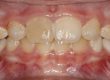



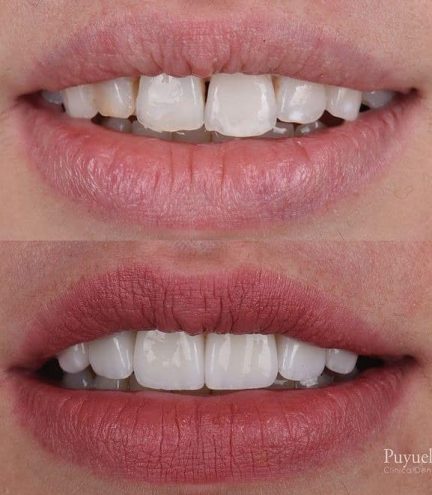
Tooth wear is the loss of tooth structure caused by tooth aging, incorrect contact between teeth, unconscious clenching (bruxism), pathologies or bad habits. In the clinic we are regularly consulted by patients with dental wear who want to recover the dimension of their teeth and improve their smile.
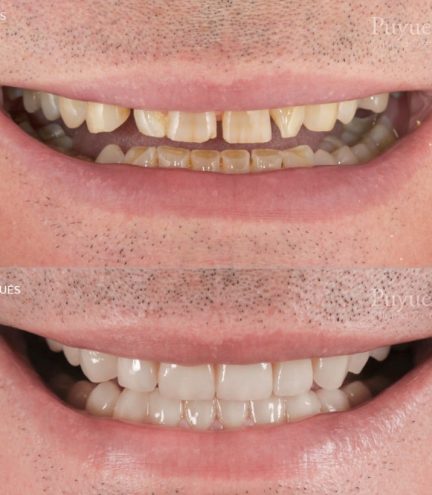
What are the causes of tooth wear?
- Dental aging. Just like people, teeth also age: they become darker, become cracked and cracks appear in the enamel.
- Excessive tooth brushing. Each person brushes his or her teeth with a different intensity. If the force is excessive or the brush too hard we will injure ourselves. In these cases it is advisable to use electric toothbrushes with force sensors.
- Bruxism. Bruxism or dental clenching is a habit that is detrimental to the masticatory system. It creates great wear and tear when the jaw is also moved unconsciously. In general, it is associated with stages of increased stress and hyperactivity in our daily lives.
- Malocclusion. Incorrect positioning between the upper and lower teeth leads to wear on the teeth that support more forces and on those with poor contact points.
- Eating disorders and reflux. Anorexia and bulimia lead the patient to recurrent vomiting causing dental erosions on the posterior surfaces of the teeth. The same occurs with the reflux of gastric juices.
The patient usually experiences the unpleasant sensation of tooth sensitivity, gingival recession and yellowish pigmentation in the worn areas.
Treatments for tooth wear
We always evaluate the causes of wear in order to carry out the most suitable treatment. If there is a malocclusion that has accelerated wear, we will recommend orthodontic treatment prior to dental restoration. In this way, we manage to distribute the occlusal forces proportionally among all the teeth and position them correctly, minimizing wear.
Three types of materials are used to reconstruct the lost tooth structure:
- Composite: We have the material in the clinic and it is indicated for minor wear. There is also laboratory-reinforced composite for intermediate wear, restorations known as composite inlays.
- Ceramic: Indicated for more severe wear, due to its high resistance. Ceramic has the best bonding properties, which is why it is suitable for veneers or inlays:
- Ceramic veneers: these are thin layers that are adhered to the teeth in the anterior areas (the most visible ones), improving their size, shape and color and protecting them from future wear and tear.
- Ceramic inlays: These are fragments or blocks that are designed to cover the missing part of the tooth to restore its function. They are normally placed in posterior teeth, although if the anterior teeth have lost a lot of structure, they will be placed in the back part and the veneers in the front part.
- Zirconium: It is used for teeth that have very little remaining structure, since it is the most resistant material. They are designed in the shape of a dental crown to embrace the entire tooth.
For severe and generalized wear that requires a complete rehabilitation, we will make a previous digital design and print it on a wax mock-up to test it before fabricating the ceramic and/or zirconia. This allows us to obtain more precise and esthetic results.
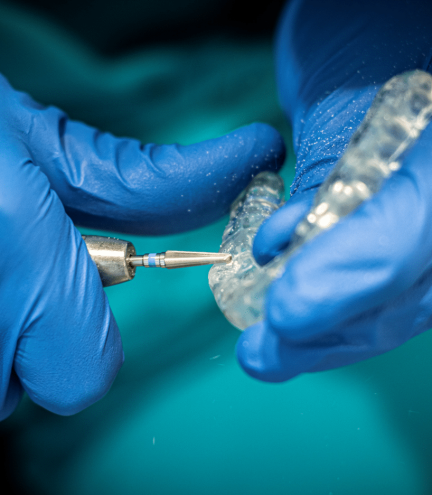
In most cases, an unloading splint is applied at the end of the treatment to preserve the results. The splint is a clear hard resin device designed to absorb chewing forces and protect the teeth.
Finally, physical therapy exercises of the temporomandibular joint (TMJ) and relaxation therapies such as yoga for facial muscle relaxation are also often beneficial.
Classification of dental wear
Erosion: is the loss of structure due to chemical agents such as carbonated beverages, acidic juices or vinegar. In these cases, yellow and brown grooves appear on the teeth.
Abrasion: is wear due to mechanical causes such as very aggressive brushing or the use of chopsticks.
Atriction: is the wear of the chewing surfaces as a result of poor contact between the upper and lower teeth, which causes the tooth to lose its natural shape and makes it difficult to grind food.
Abfraction: when the lesion is in the cervical part of the tooth and occurs in bruxers.