


Dental abfraction is a type of tooth wear that causes progressive loss of tooth structure. They are seen as wedge-shaped indentations that cause a visible bowing of the dental crown, which thins towards the neck of the tooth.
These erosions of the tooth enamel leave the inner layers of the tooth exposed, such as the dentin, which can cause tooth sensitivity and infections, which, if not treated in time, can compromise the health of the teeth. Identifying this pathology in time and detecting its causes is very important to be able to perform an effective and minimally invasive treatment.
Differences between abfraction and dental abrasion
Both dental abrasions and abfractions are types of wear that cause dental erosions, and although patients tend to confuse them, the causes and the damage they cause are different:
Dental abrasion is caused by contact of the teeth with abrasive substances or by aggressive tooth brushing. Its appearance coincides with that of yellowish-brown grooves.
However, in the case of abfractions, the loss of tooth tissue is caused by the biomechanical forces of tension and compression produced by chewing or bruxism. These lesions leave a rough tooth surface with deep, narrow cavities and an appearance reminiscent of splinters, with very sharp edges and thinning enamel, especially in the area of the dental crown.
Causes of dental abfractions
Teeth are one of the most rigid structures in the whole organism, as they have to withstand the forces of chewing. If these forces are not compensated, the most superficial part of the teeth that support more forces flexes slightly, causing microscopic chips to form in the neck of the tooth. Thus, if the unbalanced pressure on the teeth is prolonged over time, the dental enamel is eventually worn away and lost, thus producing the wedge-shaped erosions typical of dental abfraction.
Abfraction stands out among the forms of dental wear because it is not due to the action of bacteria. The main causes of dental abfraction are:
- Dental malocclusions: occlusion problems generate overloads in dental contact due to a poorly fitted bite, so that the pressure on the teeth during chewing occurs unevenly. The teeth that receive a greater load wear down, giving rise to dental abfractions. This phenomenon also occurs in cases of ill-fitting dentures.
- Bruxism: The unconscious clenching and grinding of the teeth, especially at night and in stressful situations, causes dental abfraction lesions.
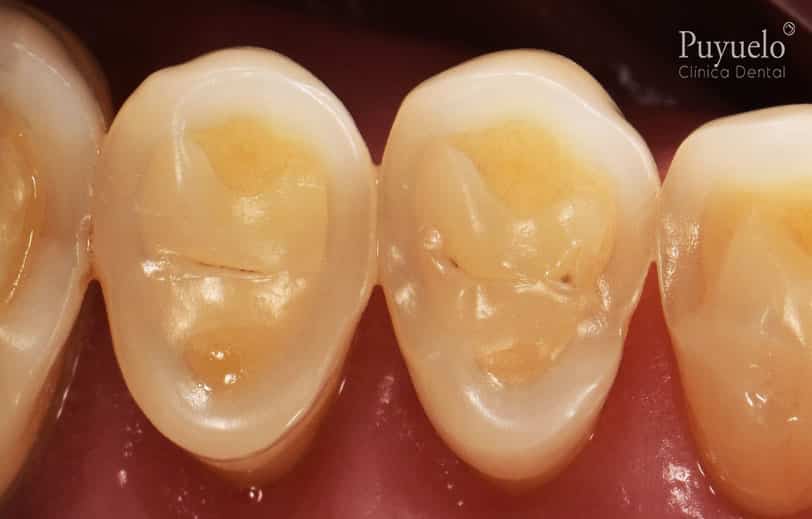
Treatment for dental abfraction
To treat dental abfraction it is necessary to identify the cause of the abfraction. If it is a consequence of dental malocclusion, we will recommend orthodontic treatment to balance the occlusion and align the position of the teeth, thus halting the progression of the abfraction.
For cases of bruxism, we recommend treating the pathology by means of unloading splints, which relax the muscles and prevent the progression of wear and tear. Consult also our treatment for bruxism that will help to improve this process.
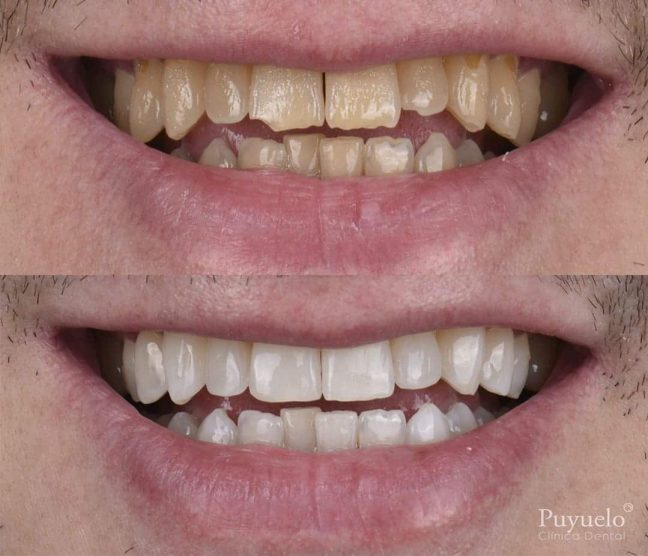
To treat teeth that have already eroded and restore their function, we will recommend restorative treatments with composite reconstructions or ceramic restorations, depending on the amount of wear. In the anterior sectors we opt for dental veneers (thin ceramic or composite veneers) and in the posterior sectors for inlays (ceramic or composite fragments) or ceramic dental caps.
Our dentists in Barcelona are committed to digital planning and less invasive techniques to rehabilitate the mouth of our patients, achieving accurate, aesthetic and reliable results.