



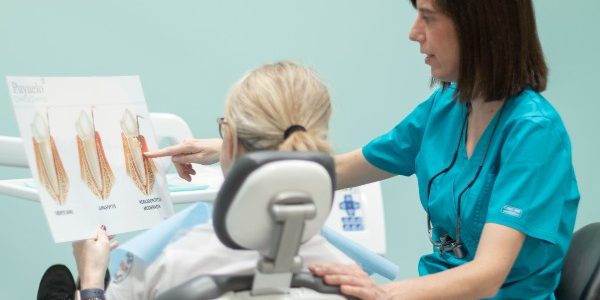
When you put yourself in the hands of a modern dental clinic, your oral health will be cared for by a team of professionals specialized in each of the areas of dentistry. The dental hygienist is within the specialty of gums and prevention and will receive direct training from the specialist dentist in these areas.
We recommend all patients to go through the hands of a dental hygienist, since preventive treatments are necessary for all those who want to keep their teeth and gums in good condition.
The two main causes of tooth loss in every human being are the bacteria that affect the tooth (caries) and those that affect the dental support (periodontitis), which is why it is so important to go to a dental office. dental clinic that has top-notch hygienists who allocate the time and tools necessary to eliminate these bacteria. In addition, they will show patients how to avoid their accumulation until the next session.
Below, we describe the main functions of a dental hygienist and the procedures they perform to eliminate the bacteria that cause cavities or gingivitis.
What procedures does a dental hygienist perform?
Dental hygiene
It is the procedure by which the professional removes all the bacterial plaque on the visible part of the teeth and up to two millimeters of the plaque between the gum and the tooth. In addition, a plaque control is performed beforehand to show patients in which areas plaque accumulates the most, with the aim of improving brushing in those areas. The prevention plan proposed during the first hygiene visit is also followed up, as detailed below.
For patients who come to the clinic for the first time, during the session, they will be offered a specific prevention plan focused on 2 fundamental aspects:
Use of the electric toothbrush
Thanks to the multiple movements made by the filaments of these brushes and the force sensors they have, they manage to remove bacterial plaque more effectively and without causing damage to the gums. The hygienist will recommend the brush that best suits each patient and explain how to use it.
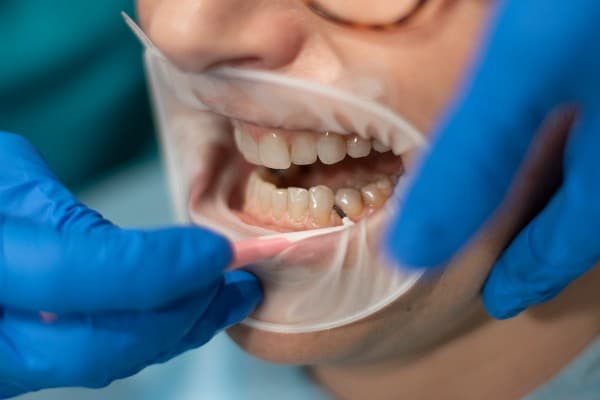
Use of interproximal brushes and dental floss
Since with the electric toothbrush we cannot reach the bacterial plaque between the teeth, it is essential to use these two tools. The floss will allow us to remove the plaque that is where the dental crowns contact, while the interproximal brushes will manage to clean the plaque that is located at the visible interdental base. Depending on the size of the interdental spaces, a specific interproximal brush will be recommended. The hygienist will explain how to use them correctly.
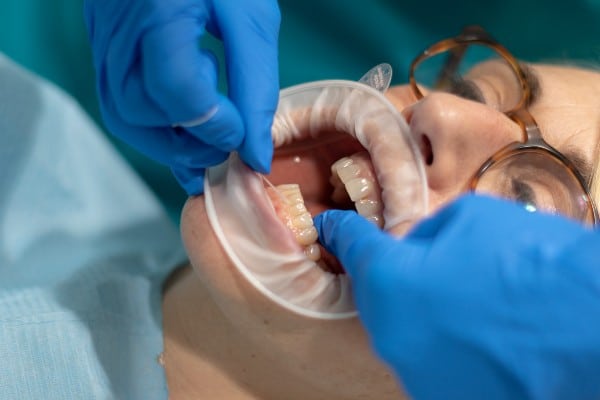
Scaling and root planing
It is the procedure by which the hygienist removes the bacterial plaque between the gum and the tooth, which is deteriorating the bone that holds the tooth. For these scrapings to be guided, we recommend a previous study, called periodontogram, in which our gum specialist will measure the millimeters of depth of the bacteria, called periodontal pockets, between the gum and each of the roots of our teeth. The gum will heal during the 6 weeks following the scaling and root planing, at which time the study will be updated in order to protocol the correct gum maintenance. In this maintenance, the hygienist will clean both the bacteria on the visible part of the tooth and those that have accumulated between the gum and the tooth, thus preventing both the appearance of caries and the deterioration of the dental support caused by gum disease.
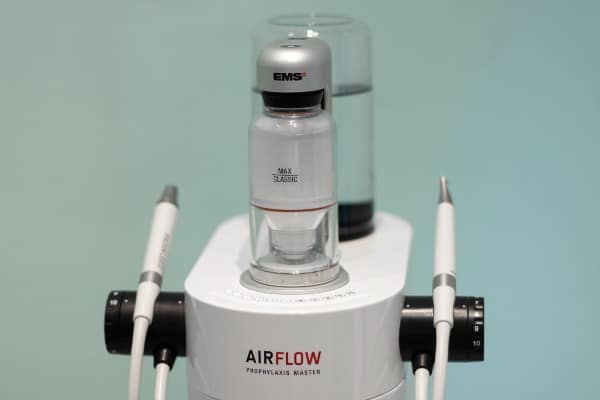
It is worth mentioning that the most advanced technology to carry out these procedures is called Air-flow prophylactic master, a device that removes soft bacterial plaque by means of air and, in order to remove hard bacterial plaqueThe ultrasonic system is less vibrating, making treatments more effective and less invasive. In addition, this technology contains a natural whitening product and an enamel remineralizer to protect teeth against caries. in dental esthetics is widely used in order to achieve good results in the patient.