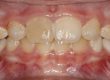



Our dentition has 28 teeth when we are children and 32 teeth in adulthood, including wisdom teeth. However, some humans have more teeth than usual, called supernumerary teeth and a pathology known as hyperdontia.
Hyperodontia affects our dental health and esthetics. Currently 0.1% to 3% of the population suffers from it, more men than women.
We usually differentiate between two types of hyperdontia:
- Simple hyperdontia: it is the most common and only one supernumerary tooth is found.
- Multiple hyperdontia: there are several supernumerary teeth.

There are hyperdontia associated with other syndromes. One example is cleido-cranial dysplasia, a genetic disorder in bone growth. Another example is cleft lip, a congenital defect consisting of a cleft or split in the upper lip.
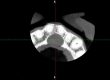
Dental specialists can distinguish cases of hyperdontia in a first examination, depending on the location and shape of the numbered teeth. A bone x-ray would confirm the diagnosis.
What are the consequences of hyperdontia?
The presence of supernumerary teeth causes an important functional and esthetic alteration in the mouth, since they prevent the numerary teeth from growing normally and sometimes even cause them not to erupt. We list the possible pathologies that trigger this pathology:
- Dental malposition: supernumerary teeth can cause the numerary teeth to erupt in a bad position, causing dental crowding and its derived hygiene, bite and esthetic problems.
- Interdental spacesIn cases where the supernumerary tooth prevents the eruption of the numerary tooth or causes it to erupt in a bad position, spaces are generated between teeth, causing the adjacent teeth to move into the space and the antagonist tooth, not occluding correctly with another tooth, to move out of its space.
- Occlusion or chewing problems: Poor tooth growth causes occlusion problems. The teeth are designed to fit together like a shoebox to properly distribute the chewing forces between them. If the growth is not correct, the forces will be poorly distributed and when biting we will be overloading the affected area, which can cause dental wear, fractures and damage to the bone that holds the teeth.
- Increased risk of caries and gum pathologies: Poor tooth growth can cause teeth to be stuck together (crowding) and makes hygiene difficult in these areas, causing bacterial plaque to accumulate. This accumulation of bacteria increases the possibility of caries and gum pathologies such as gingivitis and periodontitis.
Causes of hyperdontia
Although supernumerary teeth are formed by a hyperactivity of the embryonic cells that form teeth, the reason for this cellular activity is unknown. It has now been observed that there may be an inherited genetic component.
Hyperdontia can also be produced by some alteration or trauma in childhood, during the formation phases of the oral structures, or by the symptomatology of some syndromes such as cleft lip or some fibromatosis.
When should we treat hyperdontia? Diagnosis and treatment
Hyperdontia is usually asymptomatic, so it will be detected by the dentist through follow-up x-rays in the dental office. In some cases, aspects such as dental malpositions or delayed eruption of teeth may lead to suspect a problem of hyperdontia.
The most common treatment for supernumerary teeth will be their extraction to favor the development of the numerary teeth. We recommend seeing a pediatric dentist as soon as baby teeth appear and attending six-monthly check-ups in order to diagnose the pathology as early as possible.
To access a good diagnosis it is important to go to a dental clinic with a first class multidisciplinary team to determine the best treatment plan and the optimal time to intervene. The objective will be for the roots of the primary teeth to grow satisfactorily so that the tooth erupts in a good position. For a good diagnosis, factors such as the position of the teeth, the development times, their morphology and the impact with respect to the neighboring teeth and the bone supporting them will be taken into account.
After extracting the supernumerary tooth, in many cases and usually when it is diagnosed late, orthodontic treatment will be necessary to reposition all the teeth in their correct position within the dental arch.
Therefore, the best option is to go to our dental clinic in Barcelona to apply and detect the corresponding needs and treatment guarantees.