


The growth of the jaws influences the development of the skull, the nostrils and the eruption and alignment of the teeth, thus affecting our facial harmony. Thus, it should be taken into account that the correct development of the jaw and palate influences both the esthetics of our smile and face, as well as functions such as chewing and breathing.
Maxillary transverse dyschezia How does narrow palate manifest itself?
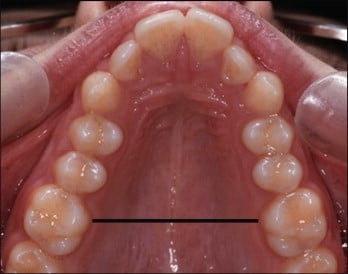
One problem that many patients develop is maxillary transverse deficiency, better known as “narrow palate”. This growth deficiency of the upper jaw manifests itself at early ages and, if left untreated, persists over time, causing problems in facial and cranial development. The lack of space usually generates dental crowding and malocclusion problems, which lead to jaw deviations and problems in the cranio mandibular joint, a pathology known internationally as Temporomandibular disorders (TMD).
What is the MARPE Technique for narrow palate in adults?
The maxillary transverse deficiency (narrow palate) is a pathology that we recommend treating at an early age by placing special expanders, as if it were orthodontics, must remain in the mouth in a fixed or removable form for a certain period of time while they act to expand the jaw..
When the patient is a child or young adolescent, the maxillary bones are still growing and their sutures are soft, making expansion easier. In these cases, expanders are simpler and are composed of disjunctors (arms) that are anchored to the teeth and will exert force on them to expand the palate as it develops.
In adult patients, on the other hand, since the maxillary bone is already formed, its sutures are harder and palate expansion will be more complicated. The traditional dental treatment to solve this problem is SARPE (Surgically assisted Rapid Palatal Expansion) surgery: a rapid expansion through jaw surgery. It is an effective treatment but more invasive for the patient, as he/she will have to undergo a surgical procedure with postoperative care.
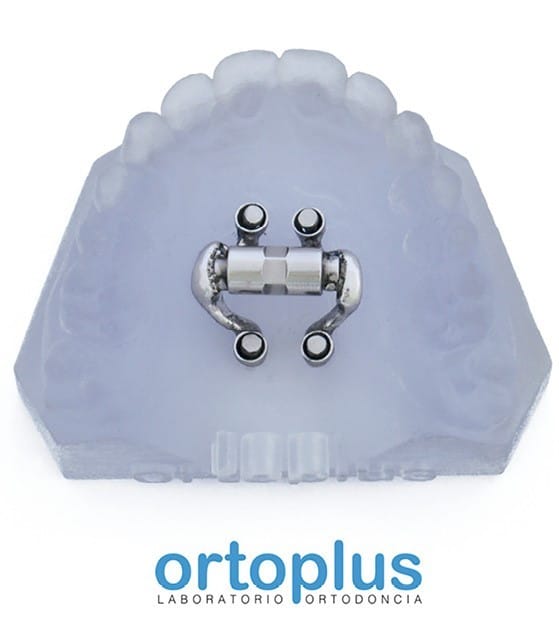
In recent years, an innovative technique called MARPE (Microimplant Assisted Rapid Palatal Expansion) has appeared, based on a special anchorage through micro-screws in the palate. This technique allows us to apply the necessary forces to expand the maxilla without having to apply forces to the patient’s teeth. In this way, we achieve palate expansion at older ages in a less invasive way and without damaging the teeth.
How is the MARPE technique performed?
Treatment with MARPE begins with an analysis of the thickness and type of the jaw bone through a 3D bone radiograph. If the analysis is favorable for the application of this technique, we will take 3-dimensional records of the palate with our intraoral scanner. With these two tests, we can digitally design the appropriate MARPE appliance for the patient’s bone anatomy.
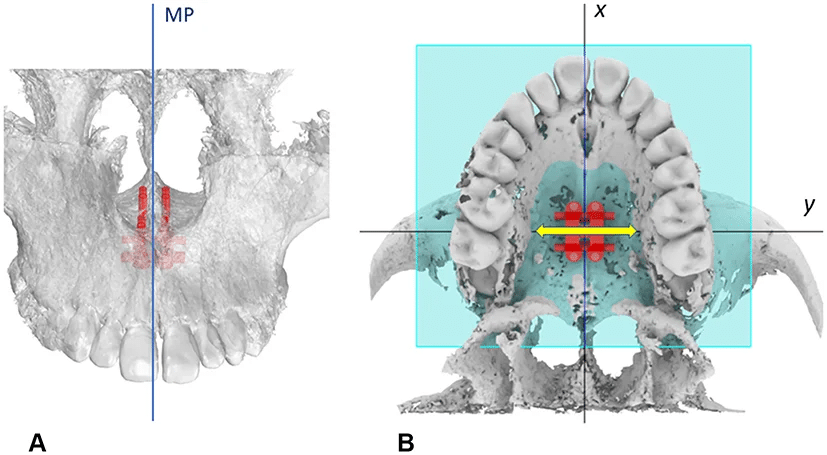
Once the apparatus has been manufactured, in the practice the expander will be fixed in the palate through the anchorage of the guided micro-screws according to the digital planning. The whole process will take no more than 60 minutes and can be performed under local anesthesia..
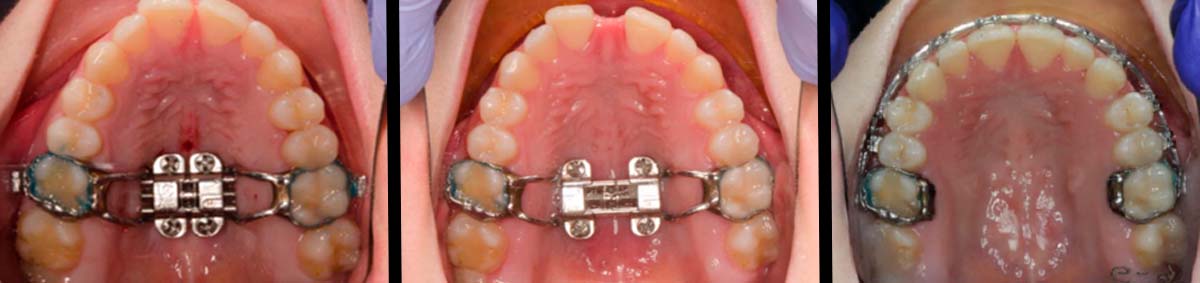
After placement of the expander in the palate, the patient himself will activate it every day for a period of approximately three to four weeks and according to the orthodontist’s recommendations. It will be activated by turning a screw, so that the palate will widen gently and progressively.
As the palate expands, the patient will notice a small gap appearing between his or her upper central incisors (the two front teeth). At the same time, you will also notice an improvement in breathing through the nose, due to the enlargement of the nostrils.
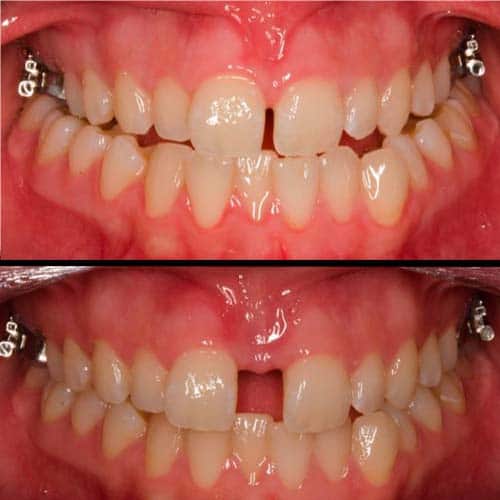
After finishing the active treatment (between 6 and 8 weeks), we will start with orthodontics using transparent aligners or brackets, with the objective of correctly aligning all the teeth and closing the space between the incisors. It is essential to consult with orthodontic experts for proper advice during this process.
The expander will remain in the palate for 6 months, the time necessary for new bone to be generated in the space created in the palate. Once this time has elapsed, palate expansion will be a reality.
Can there be complications with the Marpe technique?
The complications that can occur with the MARPE technique are reduced to gingival inflammation and the generation of mucosa around the micro-screws. Such complications can be prevented by following the indicated dental hygiene instructions. In case they happen, they will be solved by going to the clinic and following the specialist’s indications.
What role does the orthodontist play in this process?
The orthodontist is a key player in a MARPE expansion treatment. This technique is relatively new and should be performed by an excellent orthodontist. In our dental clinic we have Dr. Abboud, professor of orthodontics master’s degree at the University of Barcelona and recognized for solving complex cases with the most advanced techniques and technology. In the orthodontic world, the doctor is distinguished for being one of the orthodontists who is most successful in avoiding surgical treatment with orthodontics and obtaining successful results.
The following is a photographic sequence of a narrow palate treatment performed by Dr. Abboud with the Marpe technique:
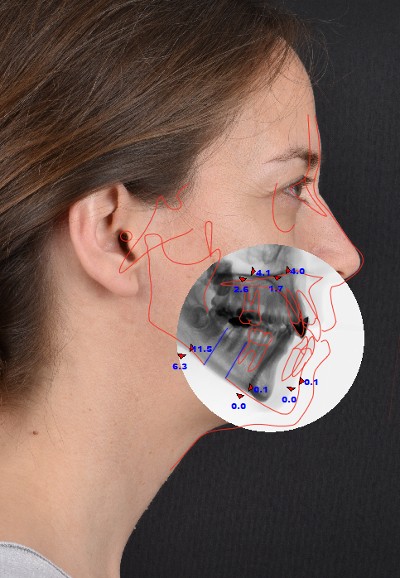
At Clínica Puyuelo we have state-of-the-art software that allows us to simulate surgical and non-surgical treatments, being able to show the patient the facial changes, the functional improvements and the particularities of each treatment option. For us, it is essential that the patient is as informed as possible before making his or her decision.