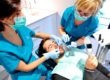



In addition to saving your teeth and preventing infection from affecting deeper tissues, periodontics is a specialty of dentistry that boosts self-esteem and builds self-confidence.
But what exactly do these types of treatments consist of? In this week’s post, we tell you how to cure periodontal disease. If you are interested in this topic, read on!
Symptoms of periodontal disease
As we have already explained on other occasions, periodontal disease is usually silent, since it does not manifest itself with pain as occurs with other pathologies.
However, there are some symptoms to which special attention should be paid in order to detect the problem as early as possible:
- Inflammation of the gums.
- Reddening of the gums.
- Bleeding gums.
- Receding gums.
- Bad breath.
- Mobility of dental pieces.
Treatments to cure periodontal disease
Once periodontal disease has been diagnosed, the appropriate treatment to cure the disease will depend on the stage of the disease.
What is curettage?
This is a dental technique that is performed in those cases in which the periodontal disease is in an advanced stage. At this stage, periodontal pockets have already formed: gaps that appear between the gum and the tooth that become larger and larger as the pathology progresses due to an increasing amount of bacteria that destroy the supporting tissues of the tooth.
Curettage is performed by means of instruments called curettes and its objective is to slow down the process of tissue destruction. During the procedure, the periodontal pockets are accessed and thoroughly cleaned. First, dental scaling is performed, removing the tartar accumulated under the gum. Secondly, the root of the tooth is smoothed.
In addition, it should be noted that it is a painless procedure, since it is performed under local anesthesia.
What types of periodontal surgery are there?
In those cases in which there is greater bone destruction, it is likely that one of the following surgical interventions will be performed:
- Resective periodontal surgery: allows the gums affected by severe periodontitis to be thoroughly cleaned.
- Gingivectomy: it is usually complementary to periodontal resective surgery and focuses on removing some pieces of gum to reach the periodontal pockets.
- Gingivoplasty: the purpose of this intervention is aesthetic, since it manages to recompose with tissues the gums that have been badly damaged or retracted by periodontal disease.
At Puyuelo we perform exhaustive periodontal studies that allow us to diagnose and treat gum disease with our periodontics in Barcelona. To know which is the most appropriate option to treat periodontal disease, it is essential that you go to our dental clinic in Barcelona.
dental clinic in Barcelona
where our team specialized in periodontics will be happy to help you.