


Impacted molars are primary (baby) or permanent molars that have developed tooth decay to the point that they are cavitated (have a hole in them).
Generally, tooth decay is caused by food debris that remains on the teeth after meals and is broken down by bacteria. When bacteria are organized they form bacterial plaque and transform the sugars in the food into acids that break down the tooth. Tooth decay can be so aggressive that it can even “drill a hole” in the tooth.
The primary molars begin to erupt at 13 months of age and are part of the child’s dentition until the age of 12. Around this age they will fall out and will be replaced by permanent teeth. Therefore, primary molars remain in the child’s mouth for approximately 11 years, during which time they must be cared for and kept free of caries.
A correct tooth brushing habit and an adequate diet are the main protective factors against caries. We should brush our teeth twice a day (or after every meal) with a little toothpaste to remove food debris and eliminate bacterial plaque.
At very early ages, the responsible adult should be the one to brush the baby’s mouth and teeth, first with a silicone thimble and then with a small toothbrush. Gradually the child will incorporate the technique and become familiar with the brush. The adult will review brushing until he/she is older and can do it alone. It is important for the child to incorporate the habit of brushing from the time he/she is a toddler.
Regarding diet, a varied diet rich in quality essential nutrients (fruits, vegetables, rice and other grains, fish, eggs, seeds, etc.) is recommended. On the other hand, superfluous, sugary and sticky foods such as pastries and sweets are not recommended.
The molars have the function of crushing food, so it is important that children chew consistent food from an early age to keep them healthy and strong.
From the age of 6, the permanent molars begin to erupt and it is a time of great changes for the child. You may see large pallets, spaces between teeth, poorly positioned teeth or even a failure to close the mouth properly. This may affect their self-esteem and discourage them from brushing. Add to that their growing interest in playing and socializing, and it’s a crucial time to insist on proper brushing.
Treatment for impacted molars
Caries is a pathology that always tends to advance, so it is important to detect it at the beginning and prevent it from reaching the nerve. It begins by affecting the outside of the tooth and progresses inward as it progresses.
The main treatment for caries is dental filling, which consists of removing the affected part of the tooth and reconstructing it with dental materials. When it is deeper and reaches the nerve (dental pulp), in addition to a reconstruction, it is necessary to treat the nerve (endodontics). Endodontics consists of cleaning the internal root canals and filling them with an inert material called gutta-percha.
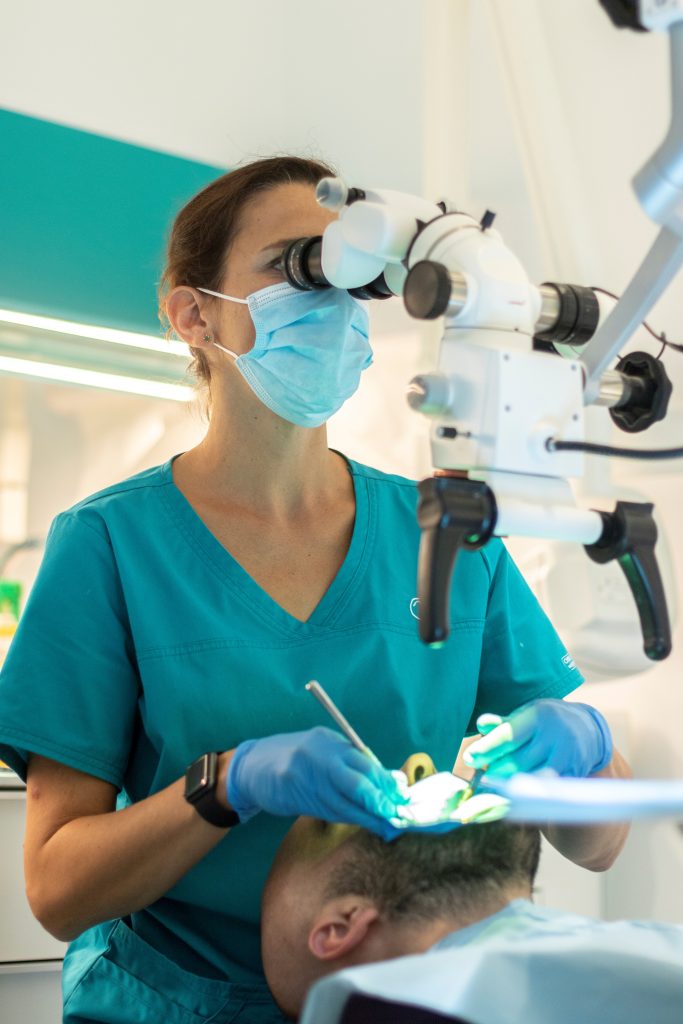
At Clínica Puyuelo we have great specialists in Endodontics and Restorative Dentistry to treat impacted teeth, as well as a dental microscope to perform root canals with more precision. Our team of dentists will advise you in order to offer you the best solution.