



Your wisdom teeth are coming in and you feel intense pain in your gums and jaws, to what extent is this symptom normal? Although the appearance of wisdom teeth is completely normal and they can develop during adolescence or even in adulthood, what we should not normalize is to feel prolonged symptoms of pain.
In fact, when our molars hurt, we should go to an oral surgery specialist for an X-ray to assess whether the growth of the molars is normal or can damage our oral health.
When wisdom teeth do not have enough space to erupt and position themselves correctly, you may have one of the following problems:
- Wisdom teeth can grow diagonally and push into the teeth next to them.
- They can grow backwards, or be retained inside the jaw, oppressing the dental nerve or affecting the temporomandibular joint (the joint that joins the two jaws).
- The malposition of wisdom teeth can lead to bacterial accumulation and occlusion problems.
Wisdom teeth growth problems are usually caused by a lack of space in the jaws or because the adjacent teeth are not correctly positioned. Although many people live their lives without ever growing wisdom teeth, most adults will go through this situation. Below we describe the symptoms of wisdom teeth problems and when we should remove them.
Symptoms of wisdom tooth problems
When wisdom teeth have a growth problem, we will feel one or more of the following symptoms:
- Intense pain, redness and swelling of the gums.
- Sensitivity and bleeding during tooth brushing.
- Halitosis and unpleasant taste in the mouth.
- In severe cases you may have swelling in the jaws and difficulty opening the mouth.
- In severe cases the pain can cause ear pain and headaches.
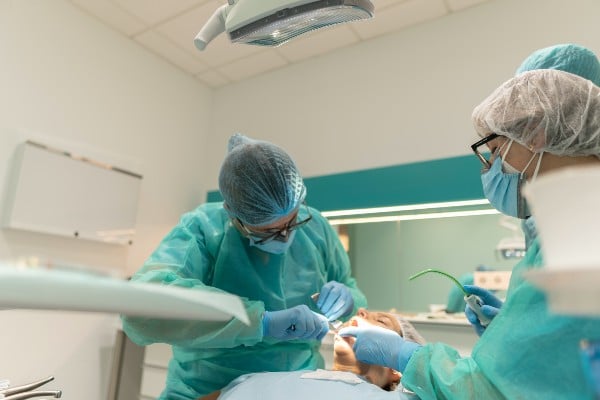
In some cases, wisdom teeth cannot erupt normally and are retained within the gums, making it very difficult for the patient to identify the source of the problem. The only way to detect the molars in these patients is by performing a dental x-ray, by which a dental specialist can observe the position of the impacted molars and consider whether extraction is necessary. It is essential to go to a dental clinic that correctly identifies the problem.
When should we extract wisdom teeth?
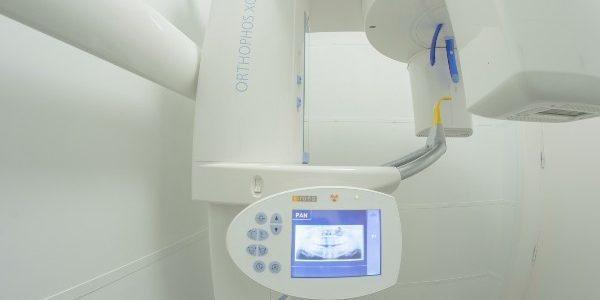
We should always go to a specialist in surgery, who by means of a panoramic x-ray and in some cases in 3D, will assess whether the growth of our wisdom teeth is going to develop normally or if, on the contrary, they are affecting other teeth or will do so in the future. Normally part of the wisdom tooth is already outside the gum and the extraction can be performed in the office under local anesthesia. First, the dental alveolus, that is, the hollow where the tooth is positioned, will be enlarged in order to move it and loosen it so that it can be extracted.

In cases where the tooth is retained within the gum and cannot be extracted, it would be necessary to make an incision in the gum, extract it in several parts or even remove some of the maxillary bone. This is a very common procedure that ends with a suture using resorbable stitches or conventional stitches, which are removed in the office after 7 days.
To avoid the symptoms and problems detailed in this article, we recommend that you have your wisdom teeth monitored by a surgeon. In case it is recommended to remove them, it must be taken into account that good surgeons manage to perform minimally invasive surgeries, minimizing the impact on the surrounding tissues and thus reducing postoperative times.