



Advanced diagnostics and custom-made unloading splints allow us to restore and protect the jaw joint.
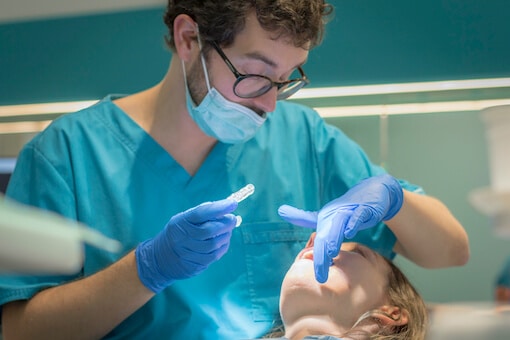
What is bruxism?
Bruxism is the involuntary clenching of the teeth. There are two types, clenching with the mouth closed, and grinding, which includes short lateral movements.
The most common symptoms are dental wear, muscle contractions, insomnia or ear pain.
The main causes of bruxism are either due to inadequate contact between the teeth: problems of occlusion or dental position, or due to stress and sleep disorders.
We have specialists in TMJ (temporomandibular joint) that through our intraoral scanner and 3D software, will measure the strength of the contact points between the teeth. With this diagnostic test and a specific clinical examination, they will determine the cause of the pathology and its treatment.
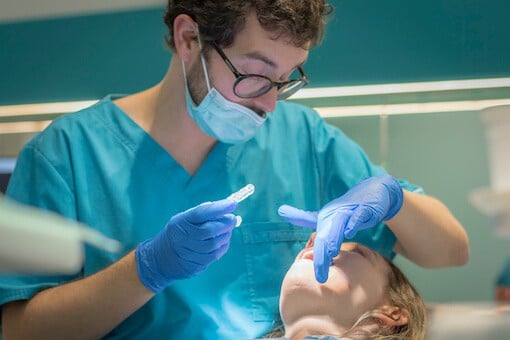
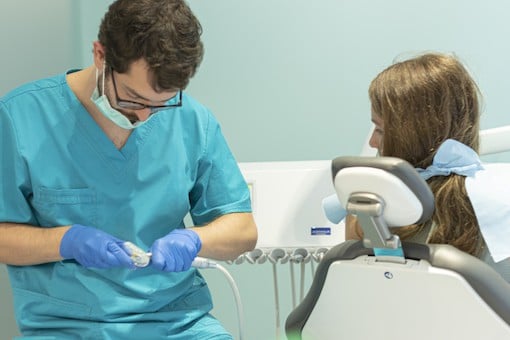
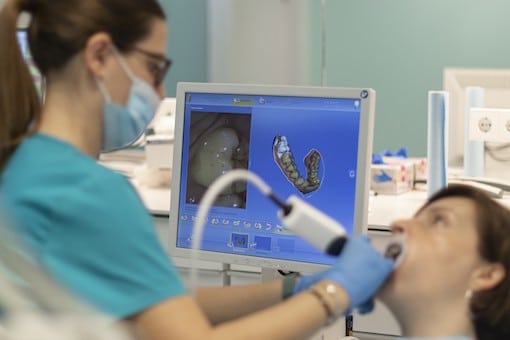
Origin and solution of TMJ problems
-
Dental malposition or malocclusion
If the origin of the problem is solely due to dental malposition or malocclusion, we will recommend orthodontic treatment, combined with orthognathic surgery only if necessary. Veneers or dentures can also be a solution to restore a correct bite.
-
Stress or sleep disorder
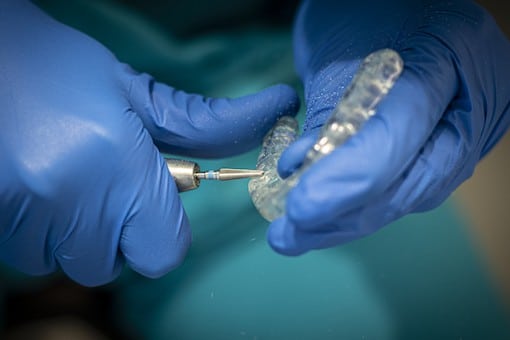
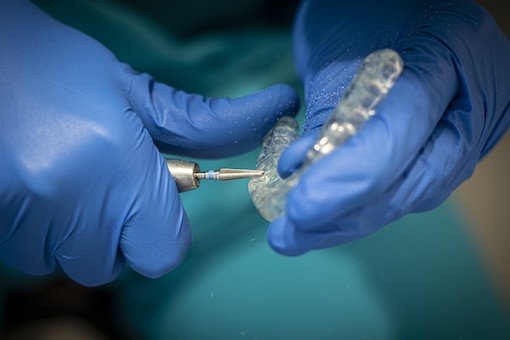
If the cause of bruxism is stress or a sleep disorder, we will recommend the nightly use of a custom-fitted splint, which will adapt the jaw in a stable and secure position, avoiding damage due to clenching.
-
Poor spinal position and dental crowding
In case of detecting a relationship between spinal malposition and dental crowding, we will recommend an unloading splint treatment combined with a first level chiropractic treatment.
Advantages of our TMJ and Bruxism treatments
Solving your doubts: Bruxism and TMJ
Solving your doubts: Bruxism and TMJ
What does ATM mean?
It is the temporomandibular joint (between the maxilla and the mandible). In the upper jaw there is a fossa in which the two condyles of the mandible rotate, which we use to open and close the mouth. This joint is surrounded by a set of blood vessels, nerves and muscles that are very sensitive to any contracture.
Can I lose teeth due to bruxism?
Yes. The excessive force that the teeth receive progressively wears them down until they can be lost if we do not treat the pathology in time and in an adequate manner. In addition, in case of gum problems, they can fracture more easily or increase their mobility.
How to access quality TMJ and bruxism treatment?
It is necessary to go to a clinic with specialists in TMJ and bruxism who study the forces of the contact points and facial bone structures through digital technology and who work on cases in a multidisciplinary way. The TMJ teams are made up of experts in occlusion, prosthetics, oral rehabilitation, orthodontics, maxillofacial surgery and chiropractic.
What is the relationship between the teeth and the spine?
Incorrect dental occlusion or clenching of the teeth can alter the biomechanics of the spine. Uneven dental contacts contract the masticatory muscles during swallowing, creating contractions in the muscles of the back of the neck and can misalign the cervical vertebrae. Hence the association between bruxism and contractures, cervical pain, headaches or migraines.
Find out more without obligation
Fill out the form and we will contact you as soon as possible.