



Periodontal studies allow us to diagnose and treat gum disease effectively.
Gum disease
Gum disease is a very common pathology that affects approximately 80% of the population at some point in their lives, being the leading cause of tooth loss in the world population. However, it is a disease that goes unnoticed in its initial phase, as it is generally painless.
Periodontal disease progresses stealthily and the first symptoms are gum inflammation, gum recession, bleeding and/or tooth mobility. The initial phase is known as gingivitis (inflammation of the gums without bone loss), which if not treated in time can lead to periodontitis, where the symptoms worsen and the loss of dental support (bone and gums) begins.
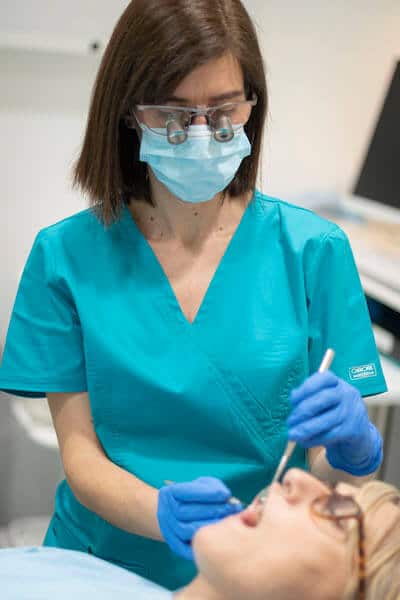
In our dental clinic in Barcelona we will evaluate the state of your gums in your first visit. If we detect possible bone loss, we will advise you to perform a periodontal study, where through a clinical and radiological assessment by our specialist, we will measure the millimeters of bone that support each of your teeth. The results of the study will determine the appropriate treatment to treat the disease and thus slow down the loss of your dental support. Finally, we will customize your check-ups and maintenance to help you keep your gums healthy.
In our clinic we have an advanced periodontics team, led by the periodontist Dra. Neus Carrió currently professor and coordinator of the master’s degree in periodontics at the International University of Catalonia. Neus implements all the advances in her specialty in the clinic and continuously trains our team of hygienists.
Gum disease
How we treat gum disease
Examination of the gums before any treatment
Advantages of our periodontics
Doubts about periodontics
Doubts about periodontics
Why is gum disease the leading cause of tooth loss worldwide?
Unlike cavities, which affect the tooth enamel and warn us with pain, gum disease progresses with little warning and affects the support of our teeth (bone and gums). In addition, specialization in gum treatment is still a novelty in today’s dentistry. However, in our dental clinic we have everything you need to recover the health of your gums and keep all your teeth.
How to access quality gum treatment?
It is necessary to trust a clinic that has a specialist with a master’s degree and experience in this field. If you are being seen by a general dentist or hygienist for the first time, they should have sufficient training to refer you to a specialist if necessary. Treatment should begin with a study to know where and how to intervene, and end with another assessment to customize the maintenance that will maintain the results in the long term.
Can lost gums be restored?
Receding gums are one of the most common symptoms of periodontal disease. To combat it, the first step is to eliminate the disease with our gum treatment. Once removed, we will recommend a gingival graft by extracting it from the palate to recover the functionality and esthetics of the dental support.
Can the lost bone be recovered?
Gum disease affects the bone that supports our teeth, causing them to move and fall out if we do not intervene in time. Once we treat the disease, we stop bone loss, but in cases where the support has been weakened, and to avoid tooth extraction, we will recommend a bone graft, an intervention we call guided tissue regeneration.
Why should the gums be checked before starting any dental treatment?
The gums cover the bone that supports our teeth, being the pillars of our teeth. Therefore, if they are not healthy, any dental treatment, be it esthetic, orthodontic or implantology, will have a risk of failure or lower durability.
What types of periodontal surgeries are there?
Resective surgery: We make a small incision in the gum to access and remove deep bacterial deposits, again facilitating the hygiene of this area and thus slowing the loss of bone and gum.
Gum graft: When gum recession (loss) leaves the root of the tooth uncovered, there is a risk of caries and sensitivity in this area. With the graft, we remove gum from the palate and insert it into the root area so that it is covered and protected again.
Tissue Guided Surgery: Recommended for those patients who present dental mobility caused by bone loss around the tooth. It consists of grafting bone in the affected area to restore the functionality of the dental support and maintain the tooth.
Crown lengthening: We reduce the height of the gum either to gain access to cure a cavity or for esthetic purposes.
Find out more without obligation
Fill out the form and we will contact you as soon as possible.